
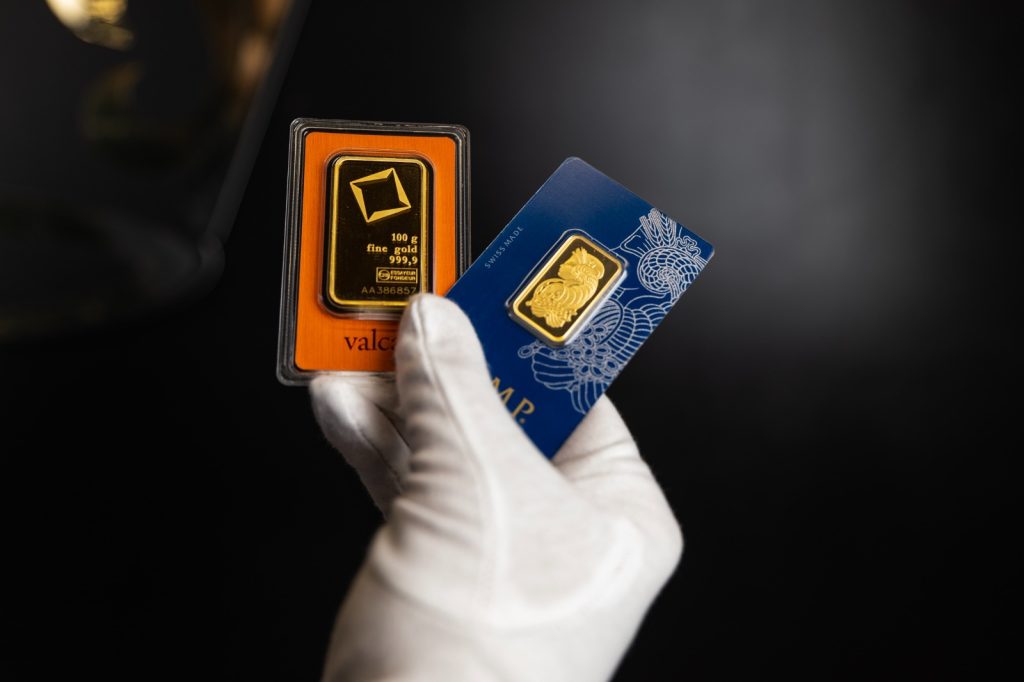
One ounce of gold can now buy 240 one-litre beers at Oktoberfest – the highest level ever recorded
Gold approached USD 4,390 per troy ounce, recovering much of the ground lost ahead of the US Federal Reserve’s first-interest rate increase in three years.
On 16 September, the Federal Reserve raised its benchmark interest rate by 0.25 percentage points to a range of 3.75%–4%, marking the first increase since 2023. At the same time, the yield on the 10-year US Treasury moved above 5%, giving investors an interest-bearing alternative that, in theory, reduces the relative attractiveness of gold.
During the first half of September, gold fell from levels of around USD 4,480 per ounce to roughly USD 4,235. The reaction following the Fed’s decision, however, did not follow the classic pattern. Gold quickly recovered and by 18 September had returned to around USD 4,390 per troy ounce.
Gold’s purchasing power hits a new record: 240 beers at Oktoberfest for one ounce
Beyond the evolution of gold’s price in dollar terms, another way to assess its performance is to look at what one ounce of gold can actually buy. Investment company Incrementum uses the Gold/Oktoberfest Beer Ratio for this purpose, an indicator that shows how many one-litre beers at Oktoberfest can be bought with the value of one troy ounce of gold.
In 2026, the indicator reached 240 beers for one ounce of gold, the highest level ever recorded. The previous record, set in 1980, was approximately 227 beers. The trend over recent years is significant: 2023 – 119 beers; 2024 – 148; 2025 – 186; 2026 – 240. In just three years, gold’s purchasing power, as measured by this indicator, has doubled.
For its 2026 calculation, Incrementum uses a gold price of approximately USD 3,827 per ounce, while a one-litre beer at Oktoberfest costs up to USD 15.90.
“At first glance, this may look like a light-hearted indicator, but it illustrates something very important about gold. Investors often focus on whether its price is USD 4,300, USD 4,400 or USD 4,500, but over the long term the more important question is what one ounce can actually buy. Gold’s historic role is not to generate interest, but to preserve purchasing power during periods when currencies and the prices of goods are changing significantly,” adds Victor Dima.
Central bank purchases support demand for gold
A structural factor behind gold’s resilience is demand from central banks. Goldman Sachs Research estimates that the pace of central-bank purchases accelerated in June to the equivalent of around 100 tonnes per month, based on a seasonally adjusted three-month average, up from 66 tonnes a month earlier.
For the whole of 2026, the US investment bank expects average purchases of approximately 50 tonnes per month, nearly three times the pre-2022 average of 17 tonnes per month.
According to Goldman Sachs, reserve diversification and geopolitical risks continue to support structural demand for gold. In its latest forecast, published at the end of August, the bank projected a gold price of USD 4,900 per ounce by the end of 2026.
Geopolitical tensions, however, raise a different question as well. Some oil-producing countries are benefiting from higher energy prices while simultaneously facing the financial costs of regional instability and conflict.
Saudi Arabia, for example, is reportedly considering raising at least USD 8 billion through new debt financing, as regional tensions and infrastructure disruptions place additional pressure on its finances.
“If tensions persist, it will be important to watch not only who is buying gold, but also whether some countries may be forced to rebalance their assets in order to secure liquidity. In such an environment, gold is both a reserve asset and one of the most liquid assets a central bank can hold,” says Victor Dima.
Despite the first US interest rate increase in three years, US Treasury yields of around 5% and turbulence across the oil market, gold continues to trade close to the elevated levels reached in recent months.
And when viewed not only through its dollar price, but through what one ounce can actually buy, the precious metal is currently demonstrating one of its strongest purchasing-power positions in decades.
***