
The rating agency S&P reconfirmed Romania’s sovereign rating at “BBB-“, with a negative outlook
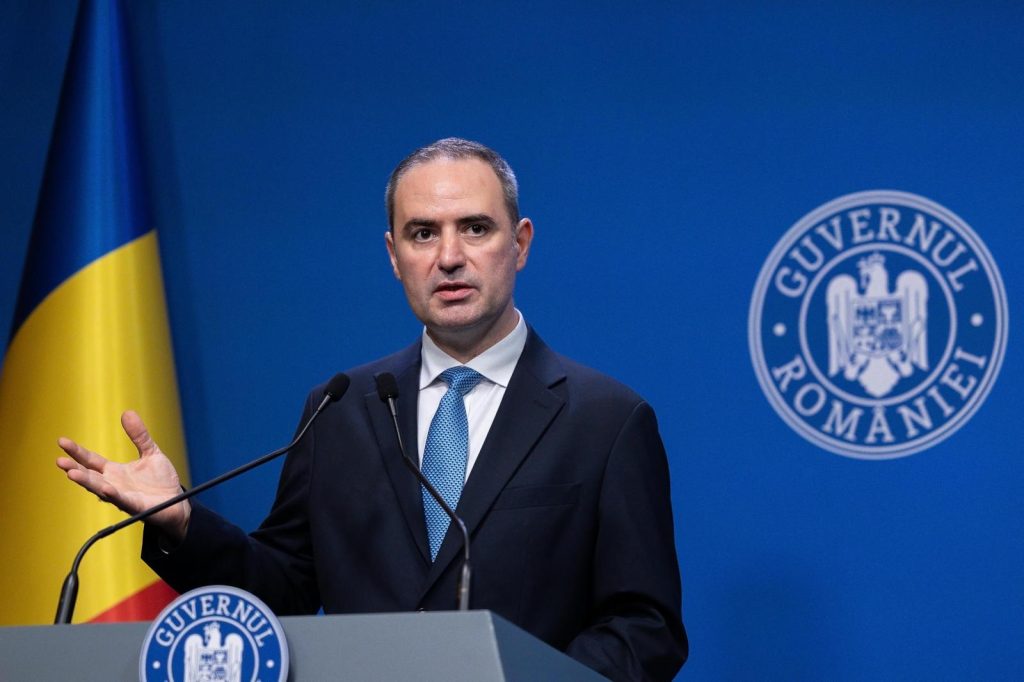
Minister of Finance, Alexandru Nazare: The observance of fiscal commitments and the sustained absorption of European funds weighed decisively. The next step is to continue the consolidation with a credible medium-term plan.
The rating agency S&P today reconfirmed Romania’s sovereign rating at “BBB-” with a negative outlook, keeping Romania in the category of countries recommended for investment
The assessment reflects the progress made in the implementation of the fiscal adjustment programme, which contributed to the reduction of the budget deficit, and confirms that the process of fiscal consolidation and the absorption of European funds remained on track in 2026. S&P also highlights the very high level of public investment, supported in a significant proportion by European funds, as the main support for economic activity this year.
S&P Reaffirms Romania’s Investment-Grade Rating Amid Fiscal Consolidation
At the same time, S&P maintained the negative outlook, highlighting the high risks posed by the implementation of fiscal consolidation in the period 2027-2028 and the possible negative effects of political instability. In the context of the persistence of a high current account deficit, the significant need for external financing and Romania’s sensitivity to changes in investor confidence and financing conditions.
“With S&P’s decision, we close an important valuation cycle that began in the summer and manage to keep Romania in the investment grade category, despite a complicated political context and a prolonged period of government interim. It is an important result, but it is not enough. The next objectives are vital: the framework of the deficit targets for 2026 and the construction of a credible budget for 2027. The valuations in the first quarter of next year will largely depend on them. If we maintain discipline in the budget execution from 2027 and remain cautious in the perspective of 2028, we can create the conditions for the return of the rating outlook to stables,“ said the Minister of Finance, Alexandru Nazare.
S&P confirms progress in fiscal consolidation
According to the agency, the results achieved by Romania in 2025 and throughout 2026 were notable in terms of the pace of fiscal consolidation. S&P estimates that the budget deficit will fall to 6.25% of GDP in 2026, almost one and a half percentage points below the level recorded in 2025, amid discipline in public spending and maintaining a solid level of budget revenues.
The maintenance of Romania’s credit rating in the category recommended for investments took into account the fact that the fiscal adjustment and absorption of EU funds remained on schedule for 2026, given that the funds in the PNRR reached absorption rates of over 90% for grants and 95% for loans.
S&P warns of potential negative consequences of prolonged political deadlock and reiterates importance of continuing fiscal consolidation
The maintenance of the negative outlook reflects the risks that S&P identifies in the implementation of the fiscal consolidation program assumed by our country within the EU excessive deficit procedure. The Agency thus considers that the prolonged political deadlock and the risk of sub-optimal political compromises, adopted at the last minute, could jeopardize the expected reduction of Romania’s twin deficits by 2029.
S&P Keeps Romania at BBB-, Urges Credible Fiscal Plan for 2027–2028
S&P: The immediate period will be crucial for the successful appointment of a government that adopts a credible fiscal framework for 2027-2028.
S&P stresses that forming a majority-backed government and adopting a credible fiscal framework for 2027-2028 are key to maintaining the fiscal consolidation trajectory. In the agency’s baseline scenario, Romania will be able to form a government that adopts such a framework.
The Agency highlights that high financing needs and rising borrowing costs will continue to put pressure on interest expenditures (which are estimated to reach 3.3% of GDP in 2028), with net public debt projected to rise to over 60.0% of GDP in 2027.
At the same time, S&P specifies that Romania’s credit profile remains constrained by the high level of the structural current account deficit, estimated at 7.5% of GDP in 2026 and 7% of GDP in 2027.
Factors that can positively or negatively revise Romania’s rating
S&P points out that the outlook could return to stable if Romania’s external and fiscal deficits were reduced, thus halting the deterioration of government and external balance sheets. Such a scenario would be supported, in the agency’s view, by a credible medium-term public policy plan – possibly based on a broad political consensus – and a revival of economic growth.
“The Agency is already analyzing Romania’s ability to continue this path in 2027 and 2028. The top priority is to build a credible budget for 2027, based on clear and sustainable measures, which continues to reduce the deficit without compromising the premises of economic recovery.
We need political consensus around these objectives so that Romania’s fiscal trajectory is not questioned by political deadlocks or the electoral cycle. Our ambition must not stop at protecting the investment rating. We need to create the conditions for the return of the outlook to stable and, over time, for improving the rating and reducing Romania’s financing costs,” added Alexandru Nazare, Minister of Finance.
On the other hand, S&P warned that it could revise Romania’s ratings downwards if the protracted process of forming the government, which occurred following the collapse of the coalition in May 2026, could make it difficult to reduce the fiscal deficit in 2027 and 2028. According to the agency, there is a risk that failure to implement a credible fiscal and policy path will not only jeopardise fiscal consolidation, but also amplify broader risks, such as deteriorating investor confidence, rising financing costs and intensifying balance-of-payments pressures.
At the same time, S&P said it could consider downgrading its rating if external pressures intensify – for example, if disruptions in the energy market undermine medium-term inflation expectations in Romania, while significantly affecting economic growth, balance of payments and fiscal outcomes.
The ratings of international rating agencies are an important benchmark for investors’ perception of the economy and influence the conditions under which the state, companies and financial institutions can finance themselves from the financial markets.
The maintenance of Romania’s rating in the recommended investment category contributes to maintaining broad access to financing under competitive conditions and reflects the confidence given to the Romanian economy in the context of the continuation of the fiscal consolidation process and the implementation of the assumed reforms. Today’s reconfirmation, however, also shows very clearly that maintaining this position depends on the continuity of fiscal consolidation, the predictability of public policies and Romania’s ability to build a credible budgetary framework for the coming years.